Feel free to contact me with thoughts, inquiries, or questions at fietsstraatamsterdam@gmail.com
I begin this endeavor as a sideline project. Before the pandemic, I lived for a bit on an Elandsgracht side street, and I loved sitting in the median and watching the world go by. I found it soothing and meditative, but also—with the striking range of people, bikes, and other vehicles—compelling and thought-provoking. And so I hatched the idea to film, Slow-TV-style but with a fixed camera, the scene as it unfolded in front of me. This is not a huge leap: in my youth, I was a serious photographer, and, as an anthropologist, I spend my professional life analyzing daily life.
A visiting professor of the University of Amsterdam for the 2025-2026 academic year, I was able to to rent an apartment right on Elandsgracht. This was my opportunity, and so I began filming in the summer of 2025. The first six weeks were trial and error, but by mid-September I had settled on an setup (see below) and began filming in earnest. While my original idea was a single shot of 7+ hours, technical and real-world issues intervened (battery life, trucks parking in front of the camera, firetrucks going by, and so on). In the end, the film is compiled of footage from several days over two weeks in September 2025, but I have tried to faithfully mirror a single day (morning, midday, afternoon, evening) to give an accurate sense of what the daily ebb and flow is like.
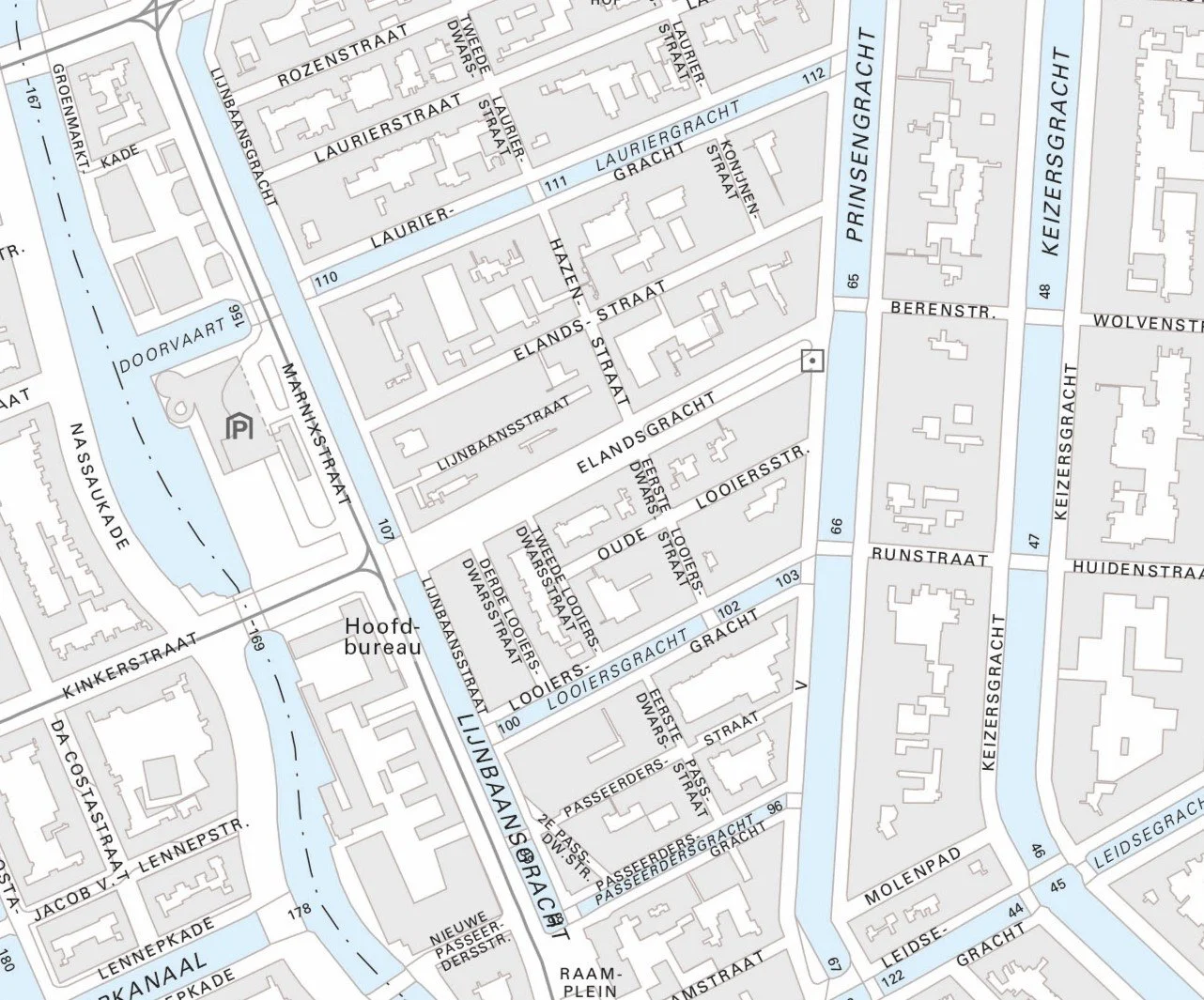
The immediate surroundings of the camera location explain much of the film’s traffic and the occasional odd sound. Elandsgracht is a primary artery from the west for entering the city center. At the western end of the street is the Amsterdam police headquarters, a bus station, a fire station, and a tram stop. To the east, the street ends at the Prinzengracht, which marks the start of the affluent inner canal belt. The whole street is about 450 meters along (although it continues seamlessly as Kinkerstraat to the west).

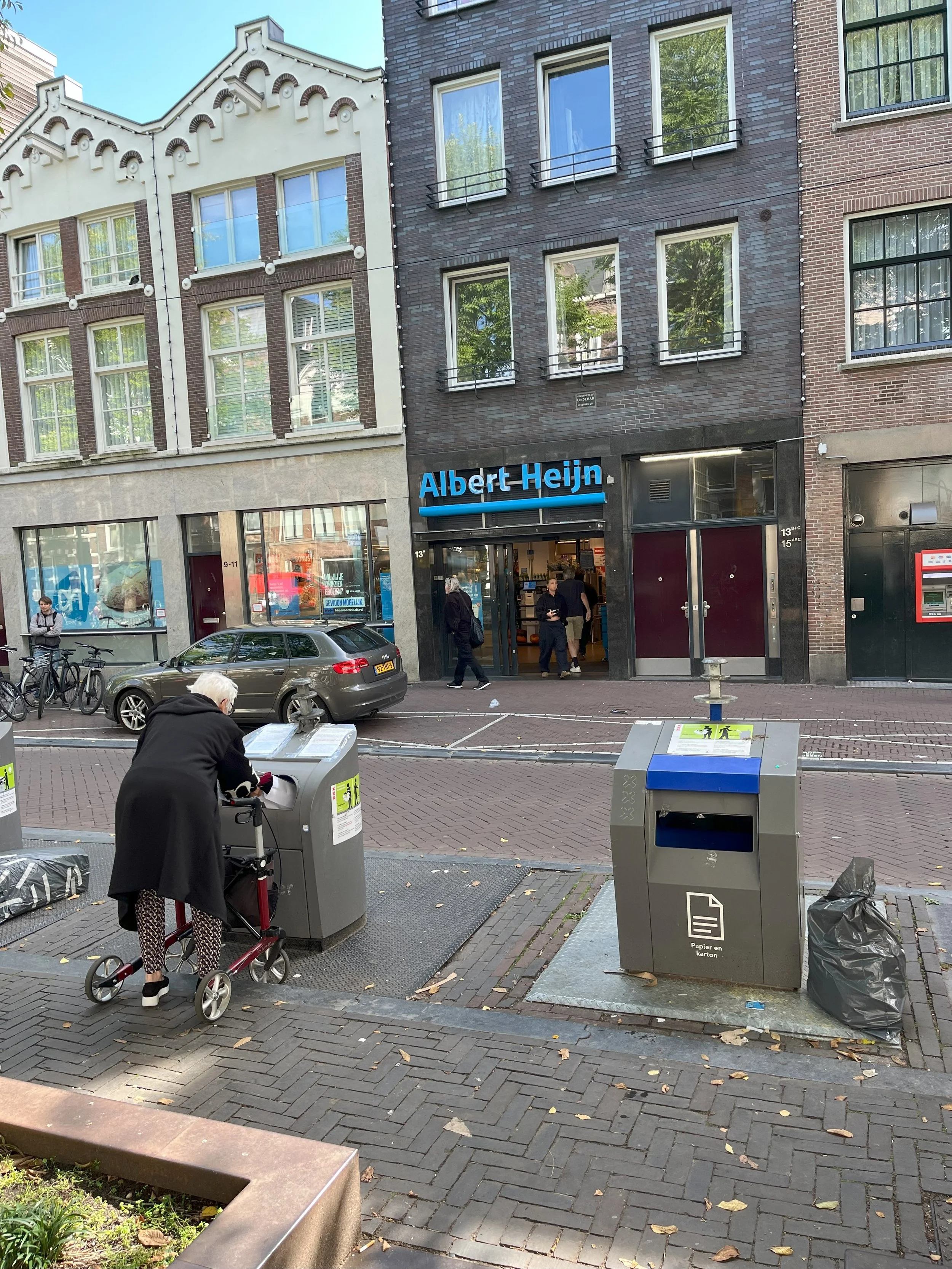
This photo shows my setup looking from the street. I filmed from the window of my first floor (which would be the second floor in the U.S.) apartment. You can just make out my DJI Osmo Pocket 3 camera on a tripod behind the open window to the right. Sound was recorded using a remote Rode VideoMic, which I attached to the front fork of my bike, the one with a pink basket. (Thanks to Jon Shayne and to the good folks at Westerpark Studios for helping me figure out how to capture the sound. And to Noud Holtman and Nick McIntyre for invaluable post-production assistance.)
Looking straight at my apartment, to the left is a popular Albert Heijn grocery store. In the film, you see people coming and going from the store, some picking up supplies for the week, others just grabbing a quick snack. The store keeps its metal racks for loading and unloading the frequent deliveries on the sidewalk in front, and you can sometimes hear the rattling of the racks.

In front of the Albert Heijn are underground recycling containers for paper, cardboard, and glass. You can hear the sound of shattering glass when people discard their bottles. And in the distance (in the direction of Prinzengracht) there is a small playground—watch for children running toward it.
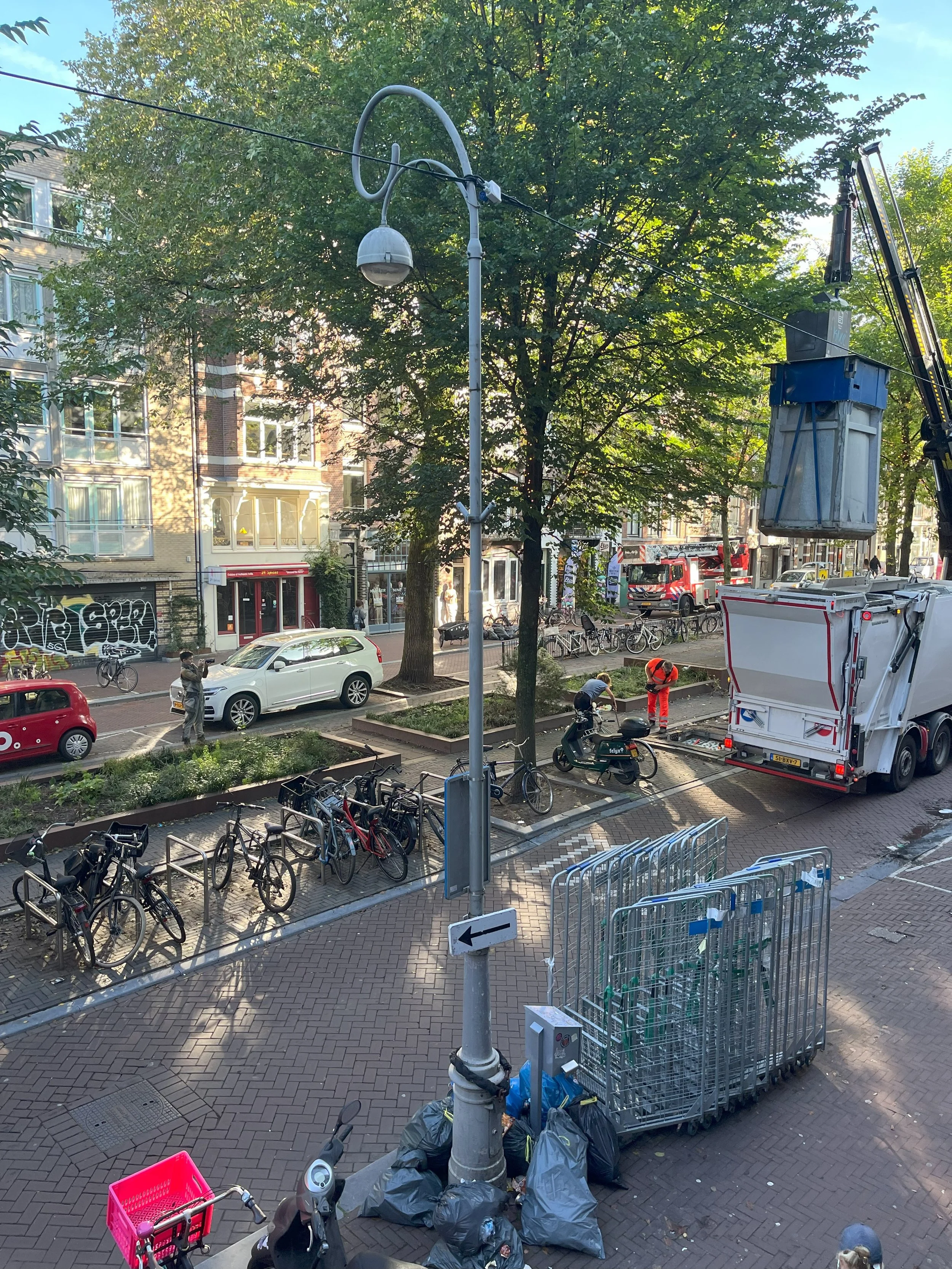
The underground recycling containers have sensors that signal when they are full and a truck is dispatched to empty them. The city is rolling out these underground bins for all trash, eliminating the need for trash days and decluttering the streets. Elandsgracht does not yet have the general refuse bins, and so we have trash collection twice a week (see the bags around the light pole). Space is so tight in the city, frequent collection is necessary, just as the Albert Heijn has to have multiple deliveries a day to keep its shelves stocked. In the photo you can see the grocery store’s metal racks in the lower right.
Filming in public like this is legal in the Netherlands. While filming I wore a bright yellow jacket and tried to make myself conspicuous when placing the remote mic. I would walk around off camera while filming, between going up to check on the camera. At the same time, to get the widest angle that I could, the camera was set back inside my window. Some people would look up and clearly saw it, others not. Within these filming constraints, my goal was to be as transparent as possible. A number of folks did stop to ask what I was doing, and I explained. I have adjusted the sound so that individual conversations are not audible beyond a word or two. In one scene, two women greet each other from across the street; that is audible, but seemed so innocuous that I did not feel bad about leaving it in—and I love how it illustrates the neighborliness of the street. I also slightly blurred the bottom of the image to obscure individual faces of people who may stop on the sidewalk. So, while I have tried to respect privacy as much as possible and remained clearly within privacy laws, I ask indulgence of any neighbors or passers-by who may have been unknowingly caught on film in this public space. I mean this as a tribute to the street and its inhabitants and visitors.