
Fietsstraat Amsterdam is a project at the intersection of ethnography and art, focusing on a particular bike-centric street in Amsterdam. The intention is to create an immersive encounter with the rhythms of urban life, and to suggest a way of understanding based on sustained attention. Over the last years, I have spent hundreds of hours sitting in the median and watching this scene pass by; I find it relaxing and meditative but also endlessly compelling.
In the film, the camera runs without commentary so that you encounter the scene much as I did. It is an opportunity to join in the simple act of watching carefully, what anthropologist Tim Ingold calls “wayfaring.” For me, it sometimes serves as background ambience as I read or think: the whoosh of bikes, the click of footsteps, the murmuring of voices forming a meditative urban soundscape. At other times, it is a window onto what street-level cycling looks like in practice: the improvisational choreography of people, bikes, and vehicles negotiating a shared space in the absence of clear instructions about what to do.
I am fascinated by Dutch urban design innovations around cyclists and pedestrians. One such feature is the fietsstraat (“bike street”), roads on which bikes have priority and cars are permitted as “guests.” The ethical language of the signage (“Auto te Gast,” roughly “cars are guests”) belies its radical proposition: upending an assumed hierarchy that gives cars top priority. Infrastructures, while often taken for granted, are not neutral: they reflect particular moral and political values, channeling certain possibilities while foreclosing others. A fietsstraat takes a moral stance on the relationship of cars and people, asserting that cars should act as guests in pursuit of the greater common good of a more human-oriented city.
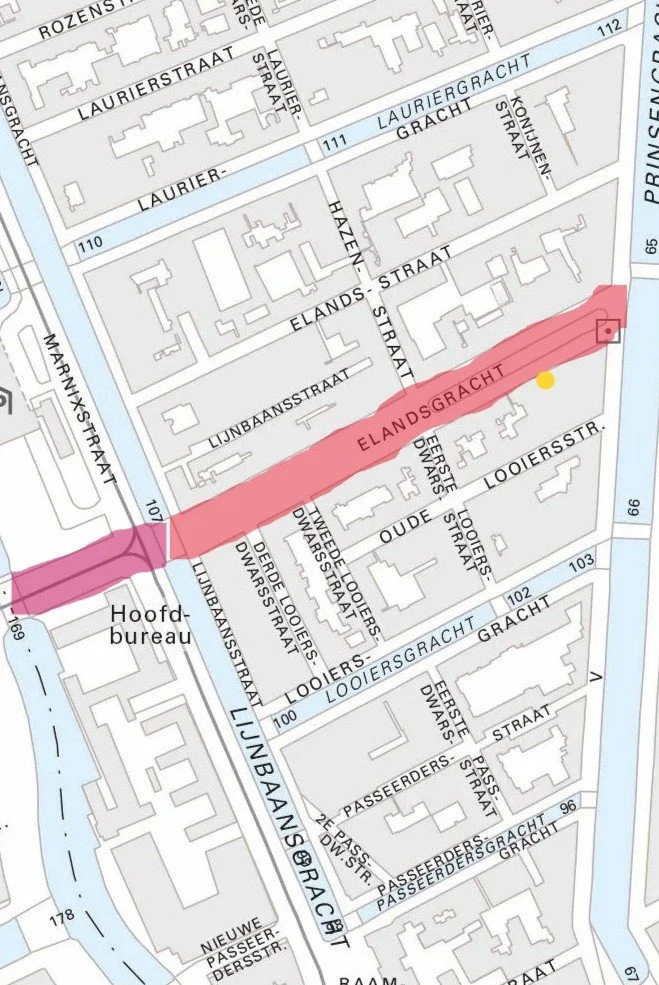
The Auto te Gast ethos is not confined to designated fietsstraten. The stretch of Elandsgracht filmed in this project follows contiguously from a fietsstraat, and while it continues the red pavement and narrow lane width, there are no “Auto te Gast” signs, indicating that both bikes and cars have equal right to the whole carriageway. This creates an ambiguity accentuated by the absence of signage and instruction; it is a space where the ethos of “Auto te Gast” carries on (to an extent), but also where taxi and delivery drivers as well as cyclists and pedestrians assert their rights. Here is where the politics of urban mobility and privilege get worked out daily at street level.
In theory, bikers have equal rights to the carriageway, and cars should accommodate them, but the practice is more complicated. We sometimes see bikers intentionally slowing down cars or drivers honking at cyclists, the tensions that erupt as bikers defend their right of way and cars push back. What emerges through extended observation is that these spaces are neither harmonious nor conflictual, but sites of constant micro-negotiation.
Fietsstraat Amsterdam’s length is crucial to the project. The almost seven-hour duration resists simple explanatory closure, as patterns surface slowly: commuters rushing to work in the morning in varied styles of clothing and bikes, teenagers gathering in the median after school, delivery trucks creating momentary blockages that ripple through the flow of bicycles. The result presents the viewer with an unmediated ethnographic encounter, a chance to observe everyday life and notice the small negotiations that animate the city. In doing so, it proposes that anthropology can be both a way of documenting the world while also opening it to new ways of seeing.